Short Summary/Preview of Project
Ukraine’s energy infrastructure faces significant challenges. Attacks have consistently targeted energy infrastructure, creating grid pressure and making supply unreliable. Combined with aging energy systems, this poses challenges for energy security and risks holding back progress as Ukraine looks to expand its well-developed renewables industry.
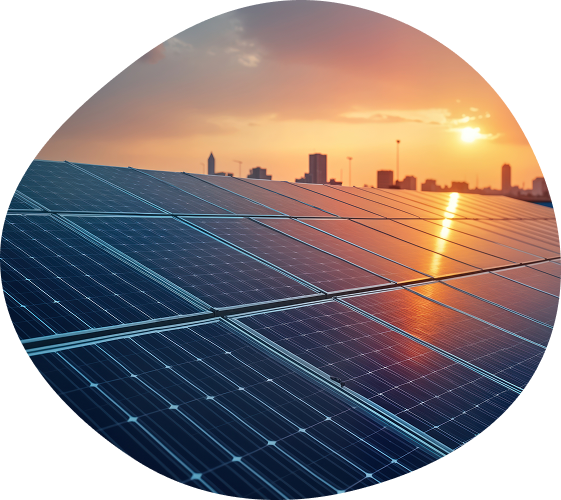
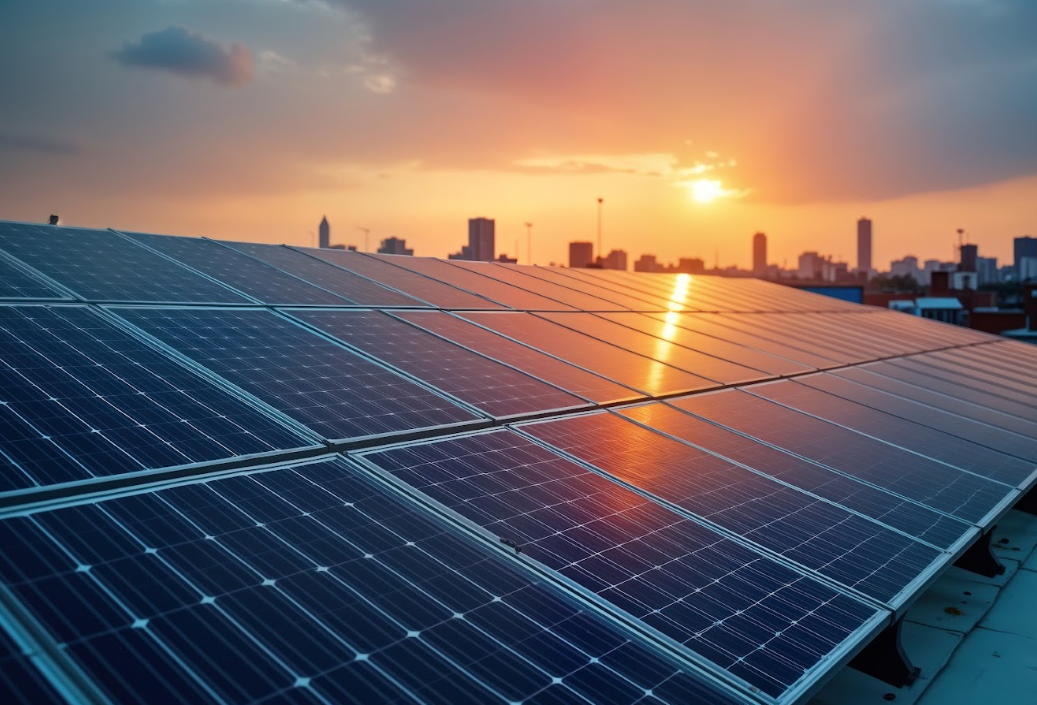
The Critical Energy Resilience for Ukraine (CERU) project is based on innovative microgrid technology. It provides a pioneering response to these challenges through resilient, distributed renewable energy systems that combine solar photovoltaic (PV) panels, battery storage, and a Microgrid Management System® (MMS). This MMS is specifically designed to enhance energy resilience for critical facilities, such as health centres, schools, and kindergartens in areas affected by unreliable grid supply.
The Solution: Advanced Energy Resilience Technology for Sustainable Infrastructure
Led by Energypro Impact Ltd, the CERU project is developing a hybrid solar and storage system managed through Swanbarton’s innovative Microgrid Management System® (MMS), a platform that intelligently balances generation, storage, and demand to ensure reliable power when the national grid is unstable.
Helios Strategia, the Ukrainian EPC (Engineering, Procurement & Construction) partner is piloting the project in Poland, before deployment to Ukraine. Other partners include NGO Security and Recovery Centre (community training) and Enso Impact (project management). The pilot installation alone is expected to displace diesel use at the health centre and orphanage in South-Central Ukraine, delivering an estimated 150-tonne annual CO₂ reduction once operational.
- The system is designed to be economically sustainable, capable of saving energy and cost, while generating revenue through tariff arbitrage and being future-ready to monetise grid services models as Ukraine looks to rebuild and modernise its energy infrastructure. The modular design makes the CERU microgrid rapidly deployable, scalable, and compatible with different technologies (inverter and battery types) and sectors (commercial/industrial, schools, hospitals, EV charging), allowing replication across multiple sites and other sectors in need of energy cost savings and grid stability.
- The Swanbarton MMS adds an intelligent control layer that enhances grid stability and reduces site reliance on fossil fuels. It uses grid signal responsiveness, selective load shedding, and optimisation algorithms to ensure uninterrupted power for critical facilities such as health centres, kindergartens, and schools.
- The system design enables prioritisation of essential services – such as vaccine refrigeration and emergency lighting – so they remain powered during outages.
- The system uses real-time data and predictive analytics to decide when to store, buy, or use energy for the most cost-efficient outcome.
By replacing diesel generation with solar PV and battery storage, the project significantly reduces emissions and fuel dependence while improving reliability.
- The project unites UK and Ukrainian partners – combining expertise in development, renewable engineering, software development and community engagement.
- Training programmes for women, veterans and displaced persons will strengthen social inclusion and support employment opportunities locally in Ukraine.
The CERU system is now installed at a health centre and an orphanage in South-Central Ukraine serving around 2,000 people and maintaining critical operations such as refrigeration for vaccines, heating and lighting, even during extended blackouts.
Progress and Impact
Over the past few months, the CERU project has achieved major milestones:
- Installation success: Solar PV arrays, battery storage, and the MMS are now operational at both the orphanage and health centre in South-Central Ukraine.
- Technical advancement: Swanbarton’s Energy Management System EMS has been fully integrated, enabling real-time energy management and testing.
- Commercialisation: The commercial model has been created and tested to support the business case through designing optimal infrastructure configurations for energy, carbon and costs savings.
- Training and demonstration site: One of the challenges faced by the project has been finding ways to train the Helios team on installation and commissioning of the EMS. To address this, the partners have designed and installed a system at an agricultural facility in Poland – this allows the UK and Ukrainian teams to test the installation and carry out training in advance of the works being carried out in Ukraine.
- Collaboration despite constraints: Travel restrictions and security risks have made in-person work difficult, but partners have maintained strong cooperation through frequent virtual meetings and planning sessions.
- Community engagement: CERU partners, including Helios Strategia and the Security and Recovery Centre, have met with community leaders to assess energy needs and plan long-term cooperation on resilience.
- Visibility and outreach: The consortium presented the CERU project at the Ukraine Climate and Investment Roadshow in London, engaging with investors and energy sector stakeholders interested in supporting Ukraine’s renewable energy and resilience initiatives.
The project demonstrates that decentralised, renewable microgrids can deliver tangible humanitarian and economic benefits. Health services are now operating independently from grid outages, providing a model for wider replication across Ukraine.
Looking Ahead
By the end of the project, the team hope to have delivered positive benefits for the community by providing resilient energy to a critical health centre and orphanage.
This demonstration will confirm both the technical and the commercial feasibility of the innovation. It will have built a strong partnership that will continue to collaborate beyond the end of the project with InnovateUkraine, as well as training around 100 people including veterans and displaced persons – introducing them to skills for working in the renewable energy sector that will be a critical part of the rebuilding of Ukraine.
Through the InnovateUkraine programme, the team will have identified the market opportunities for the technology, looking beyond the social applications to include commercial and industrial customers, building on the extensive track record of the partners. Based on the results of the pilot, they will have developed a strong commercial case – and by the end of the project they will be actively engaging investors for investment in scaling the technology.
The partners aim to expand CERU’s impact beyond its initial demonstration phase.
Longer-term, CERU’s model offers a pathway for energy independence and reconstruction in Ukraine. By proving the technical and commercial feasibility of distributed renewable systems, the project will help unlock private investment and strengthen Ukraine’s green recovery.
The approach is also replicable globally to be suitable for communities in disaster-affected or energy-insecure regions that need resilient, low-carbon power solutions.
The Project Team
The CERU project is supported by a collaborative team of partners, including:
- EnergyPro Impact Limited (Lead), (UK)
- Swanbarton Limited, (UK)
- Enso Impact Limited, (UK)
- Helios Strategia, (Ukraine)
- Security and Recovery Centre, (Ukraine)